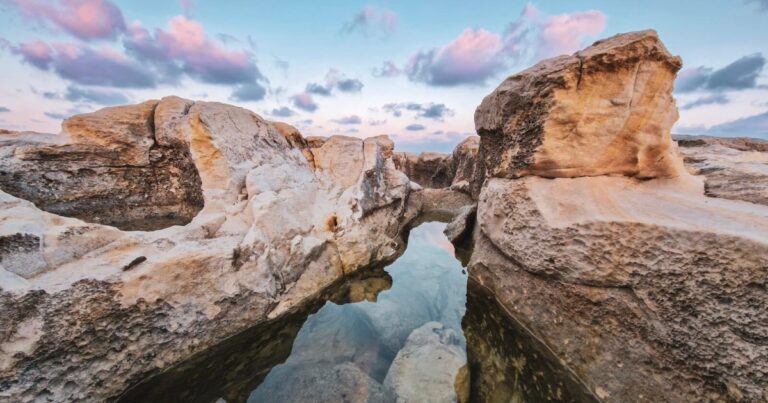
10 Most Beautiful Places for Hiking in Spain

There is also an abundance of opportunities for hiking in Spain. Yet, when many people think of Spain, that’s not what comes to mind. Instead, it might be a picture of the coastline with its turquoise waters and beautiful white-sand beaches.
However, have you heard of the famous El Camino de Santiago that leads through some of Spain’s most beautiful landscapes?
From Barcelona to Madrid, from Valencia to Zaragoza, Spain is one of the most amazing and popular countries in Europe. There are so many places to visit and things to see that it can be a little overwhelming. However, one of the best ways to see this diverse country is to go back to nature.

Hikers are always looking for new trails around the world to explore and challenges to conquer. We all know how incredible a hike can be: fresh air, scenic views and a sense of accomplishment when you reach your destination. Some of the best hikes in Spain are the perfect place to start.
There’s a diverse selection of hikes that are sure to please any outdoor enthusiast. From short, easy treks for beginners to vigorous day-long excursions through the mountains for seasoned hikers, Spain has something for everyone.
Love hiking? Grab my favourite hiking gear!
✅ I adore ACAI outdoor trousers
✅ These are my favourite hiking boots
✅ Book cheap flights and accommodation with Booking.com
What is the famous walking trail in Spain?
It’s called the Camino de Santiago or ‘Way of Saint James’ in English. If you’re planning a trip to Spain, it’s worth considering as it’s one of the best hikes in Europe.

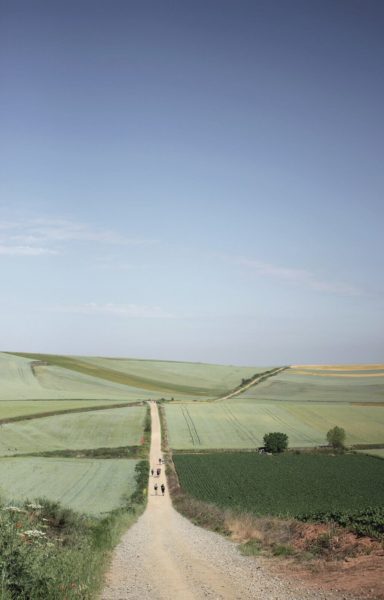
One of Europe’s most well-known pilgrimage routes and has been around since medieval times. It’s an approximately 500-mile-long series of paths that span across northern Spain to Santiago de Compostela where it ends, making its way through some beautiful landscapes along the way–and some not-so-pleasant ones too!
If you’re looking for a challenge, or just want to experience something that is truly out of the ordinary, then this hike might be perfect for you.
What are the best places for hiking in Spain?
Spain is a hotbed for hiking! From the Pyrenees to Andalusia, there are tons of options for hiking in Spain for those who want to get outside and experience nature.


In fact, there’s such an abundance of natural beauty, to the point where I could probably create a list for each season. With that being said, it’s hard to determine which hikes are “the best” as they all seem pretty incredible in their own right.
If you’re thinking of exploring some Spanish hiking trails, then this should give you an idea of some of the best hikes in Spain.
1. Mulhacen, Sierra Nevada National Park
Mulhacen hike in Sierra Nevada National Park in southern Spain is one of the best places for hiking in Spain.
With its 3479 meters of altitude, it’s the second-highest peak in the country, the highest in mainland Spain and the entire Iberian Peninsula.
Surprisingly, it’s super accessible. In the summer months, you can take a shuttle bus from Capileira to Mirador de Trevelez and walk the last 779 meters to the peak. The trail is pretty easy to follow. It is not a technical hike either, so everyone can do it, although you should be in average physical condition.
The shuttle bus will pick you up exactly 6 hours after drop off. This will give you plenty of time to walk up and down and enjoy the magical view.

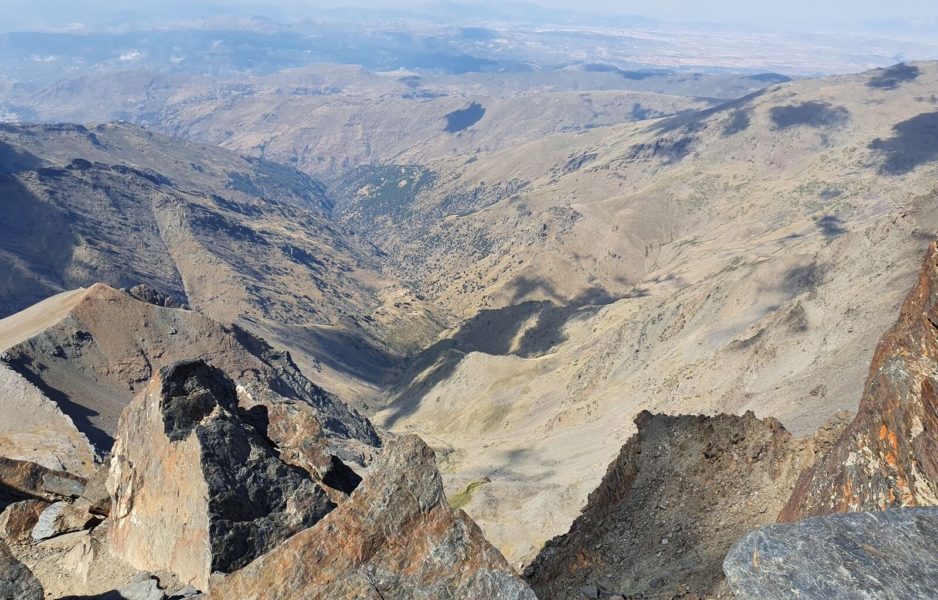
But, for the adventurer, Mulhacen can be reached in two days from Capileira. But, you’ll need to spend the night either at the guarded refuge, Refugio de Poqueira or one of the unguarded refuges.
You can also hike from Sierra Nevada (the village) or Hoya de la Mora across Pico Veleta and stay the night at one of the unguarded refuges.
These two hikes will take you up the unforgiving west flank of Mulhacen. This is a much bigger challenge and requires a good physical fitness level to achieve.
2. GR 221, Mallorca
Dry Stone Route GR 221 is a beautiful long-distance trail in Mallorca – the largest Spanish island in the Mediterranean Sea.
The trail is beautiful. It snakes through the Tramuntana mountain range and Mallorca’s picturesque villages with beautiful views of the ocean.
Trail GR 221 is over 120 km long and starts in s’Arracó town and goes all the way to Port de Pollença. A very nice part of the trail is from Valldemossa (a lovely mountain village) to Lake Cúber and Lluc Monastery.

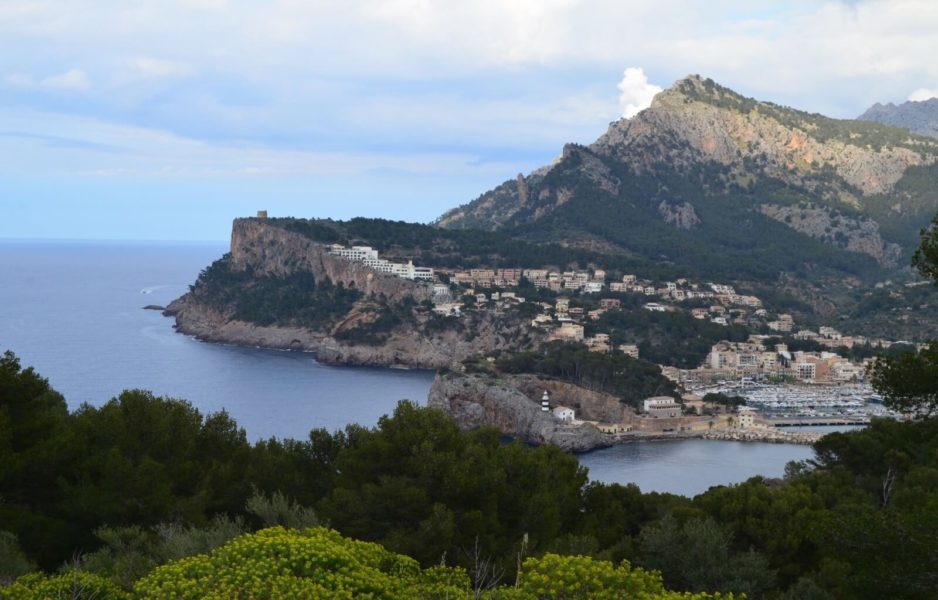
Don’t forget to stop at Port de Sóller – a picturesque town with a beautiful bay. Even though the trek ends in Port de Pollença, visiting Cap de Formentor is well worth it – there is a lighthouse overlooking impressive cliffs.
The trail is not that difficult. It’s easy for everyone who is used to doing at least some weekend hiking.
There are huts called refugees (hikers’ hostels along the way). Drinking water can be found in every village and there are water sources even in the mountains. You can easily get by local buses from Palma to s’Arracó or other villages along the trail.
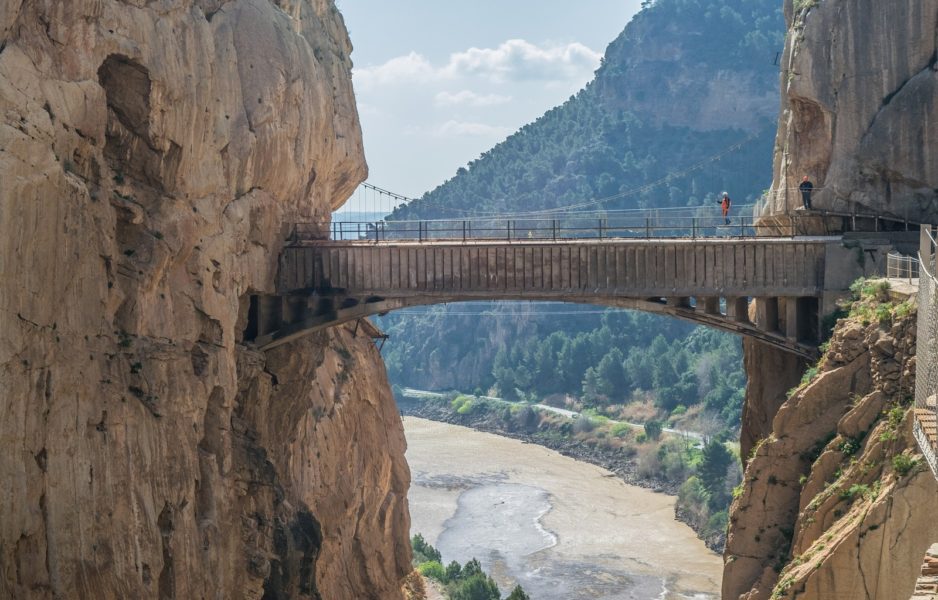
3. Caminito del Rey, Malaga
Forget the best hiking in Spain, El Caminito del Rey in Malaga is one of the best, and admittedly used to be one of the most dangerous, hiking trails in the world!
In 2015, it re-opened with a new, safe path pinned to the vertical cliff wall 100 meters off the ground. Right under it, you can still see the remains of the old path where so many lives were lost.
To hike this trail, you have to book a ticket in advance. It is €10 or €18 if you want a guide and the ticket price includes a mandatory helmet.

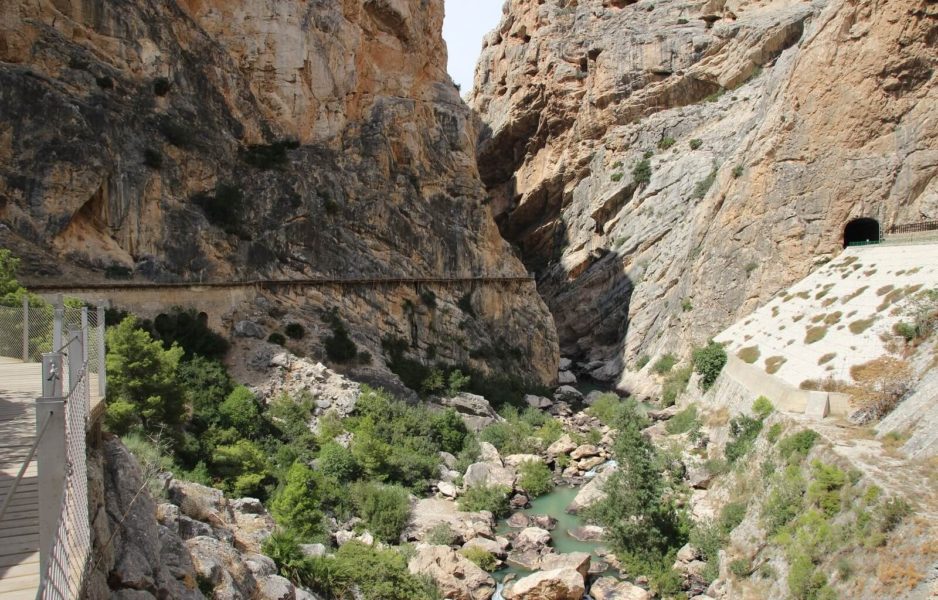
Caminito del Rey is a one-way path that takes about 2 hours. It is easy to walk as there is not much elevation, but for the faint-hearted, it can be a mental challenge.
The daring trail takes you through the mesmerizing Desfiladero de Los Gaitanes Gorge. It follows the cliff wall of the inside of the gorge along the glittering river. In some places, the gorge is so narrow it feels like you can almost touch the other side.
The trail starts from El Kiosko restaurant where it takes 20-50 minutes to get to the control cabin where you show your ticket, get your helmet, and meet your guide if you booked that. The trail ends in El Chorro where you can take a bus (which costs €1.55) back to El Kiosko.
✅ I recommend this tour to Caminito del Rey from Malaga
4. Ruta los Cahorros, Monachil
Ruta Los Cahorros in Monachil makes a fantastic day trip from Granada and it’s suitable for the entire family.
The trail starts in the village of Monachil. It follows the river of the same name through the forest, towards an old irrigation channel.
Not long after the start, you will encounter the first of the four hanging bridges. The bridges are part of what makes this trial so special and one of the best hikes in Spain.
The last hanging bridge, however, is the one that will raise your adrenaline levels. It’s 55 meters long, hanging above a waterfall, 15 meters above the ground.

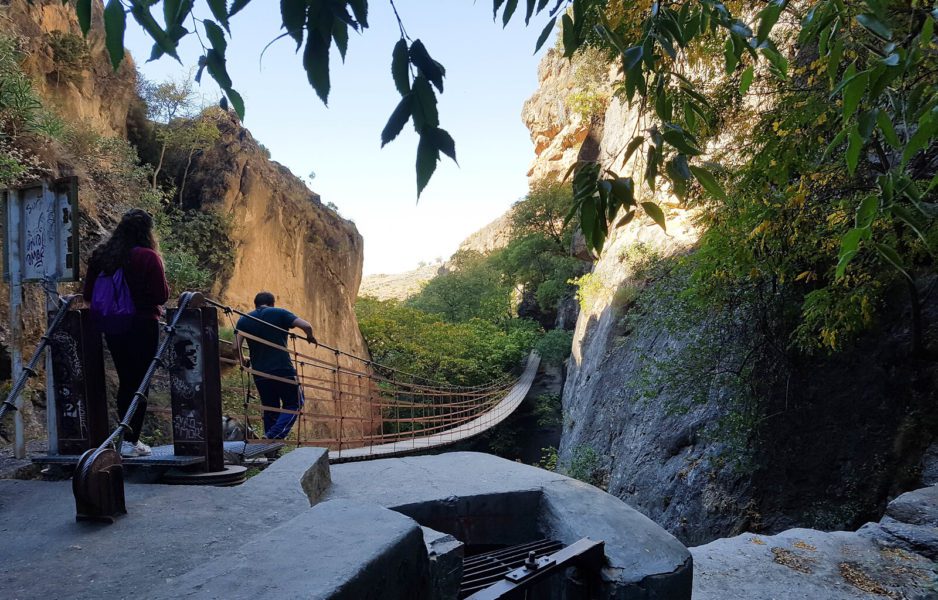
Many people stop here and prefer to have a picnic and enjoy the cold waters of the river, at the base of the waterfall. If you continue, however, you’ll enter a narrow canyon, where extreme sports lovers like to practice rock climbing and bouldering.
The path continues on one side of the canyon, alongside the river. From place to place there are metal hangers that will help you go around obstacles such as bounders.
Los Cahorros is a proper adventure trail, suitable for Indiana Jones! Even so, the first part of the trail, up to the end of the canyon, is accessible to anyone. The second part climbs a mountain and returns to Monachil over it. It’s steep and quite hard because there is no shade at all.
Similar to a lot of hiking in Spain, it is not recommended to attempt this part of the trail in summer, when the temperatures are scorching. If you do, however, expect to meet wildlife, such as the Iberian ibex. The entire length of the trail is 7.2 kilometres, and the hike is graded as moderated.
5. Camino de Santiago
Spain has an untold number of hiking trails, some short, some long, some easy and some that are quite challenging. Perhaps one of the oldest is the Camino de Santiago.
The ancient pilgrim route runs from numerous starting points across mainland Europe to the city of Santiago de Compostela. Here, the remains of the Apostles St James lie inside the grand cathedral.
While there are several routes, ranging in length and difficulty, the most famous amongst them is the Way of St James, also known as the French Way. This 800km route runs from the small town of Saint-Jean-Pied-de-Port at the foothills of the Pyrenees mountains in France.
Along the way, it passes through Pamplona, Leon, and Astorga to end in Santiago de Compostela close to Spain’s western border.


It takes around 30 days to complete the journey for an average hiker and is one of the best hikes in Spain. The journey will take you through mountains, lush green hills, the flat plains of the Meseta, and back through the mountains in the beautiful region of Galicia.
While the majority of the route is enjoyable and without challenge, don’t underestimate the endurance needed to complete this hiking trail. Remember to schedule break days in your journey to rest.
Take time to enjoy your surroundings, indulge in the local cuisines (as they change from region to region), and bask in the significance of this ancient journey that has been followed for centuries.
6. Camino Primitivo
The Camino Primitivo or the Original Way is one of the oldest walks in Spain. It was first walked in the 9th century by Spanish King Alfonso II and crosses two Spanish provinces: Asturias and Galicia.
The route starts in Oviedo and finishes 320 km later in Santiago de Compostela. Oviedo can be easily reached by bus or train from many Spanish cities and towns. The nearest international airport is in Castillon, 50 km from Oviedo.
The Camino takes between 12 and 14 days to complete. The trail is a bit demanding due to multiple ascents and descents but nothing technical or hectic. It is suitable for relatively fit people of any age, for couples and solo travellers.

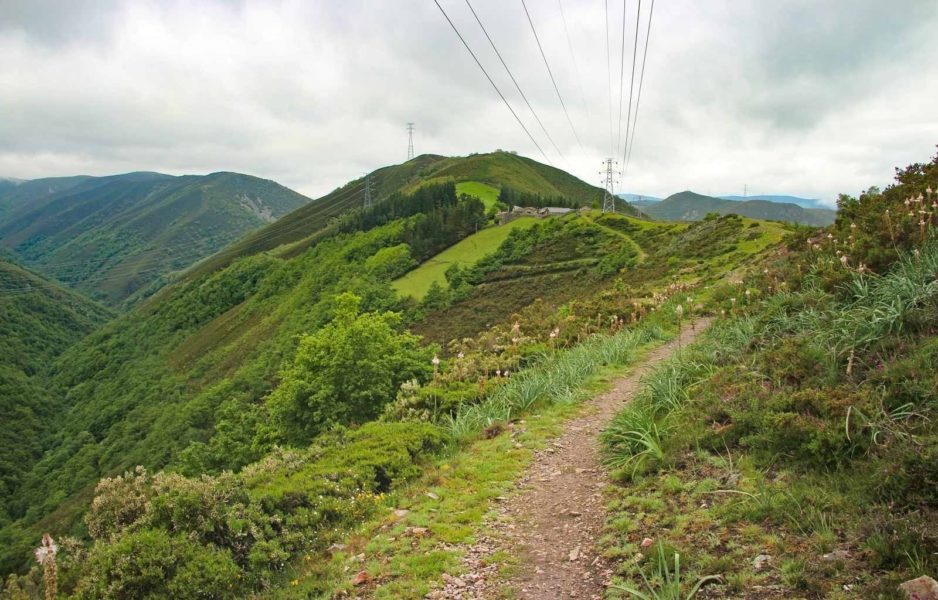
The route is marked with yellow shells and arrows. Summer months are the best time for walking the trail as the weather is warm and there’s not much rain which can make the path slippery. Off-season it rains a lot and in the winter months, there is a lot of snow on the route.
The scenery on the Camino is truly spectacular and not very typical for Spain; lush green forest, mountain peaks, rivers and waterfalls, charming towns, and stunning lookout points. It’s a very peaceful trail for those who want to enjoy the nature and tranquillity of the forest and the mountains.
7. Cami de Cavalls, Menorca
If you’re looking for a truly unique way to experience the beauty of Menorca, why not hike the Cami de Cavalls? This ancient walkway spans the entire circumference of the Balearic Island and was once the main right-of-way for horseback transport.
Despite being one of the best places for hiking in Spain, it’s less popular, and therefore much less crowded than the coastal tracks. The trail weaves around the island, taking in natural parks, native forests, ancient sites, and coastal views.

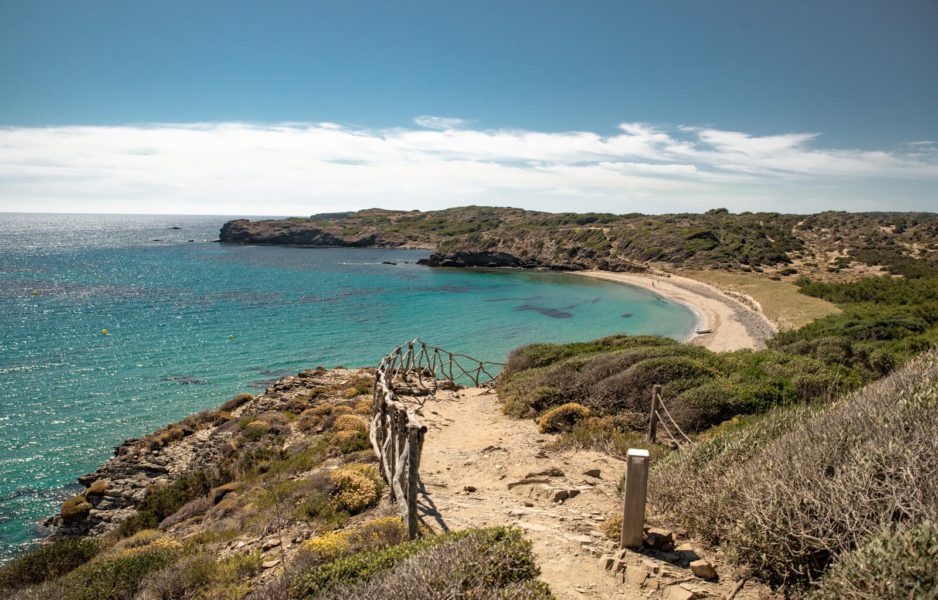
The entire track is 185km long and is broken into 20 stages. You can easily tackle just a few stages that suit you best rather than the entire multi-day hike. Most of the walks are rated as easy or moderate, and they vary in duration between 1.5-4 hours.
As a fairly level island, you won’t be required to climb, and the trail is well-marked, making it difficult to get lost. This also makes completing some of the stages very achievable even with kids in tow.
Some of the best stages are those that take you to Menorca’s hidden beaches. Try the Cala Galdana to Cala Mitjana leg and take in the beautiful view of Cala Mitjaneta on the way. Or hike to Cala en Calderer from Platja de Binimel-la and stop by the other-worldly Cala Pregonda en route.
The stage that goes from Cap de Favaritx, past Cala Presili (pictured) to Cala Tortuga is a favourite too. Remember to always take adequate water and food with you when walking the Cami de Cavalls, as there are very few places to refill on your way.
8. Frigiliana to Acebuchal
One of the lesser-known hiking trails in Spain is the trek from Frigiliana to Acebuchal. Located in the southern mountains, Frigiliana is an adorable little Spanish town located not too far from the coast.
The village is known for its Moorish architecture and fascinating history. It’s a favourite among tourists who come here to stay for a few weeks or even just for a quick day trip.
Acebuchal is another small mountain town but with a very different story. The village is much smaller and was abandoned for more than 50 years after the Spanish Civil War. Descendents of former residents rebuilt the village in the early 21st century and restored it to its former beauty.


Today only a few dozen people live here full time and operate multiple restaurants and even guesthouses and small hotels. Acebuchal is a beautiful Spanish hiking destination and spot for the perfect lunch with a view.
The hike there is 7 kilometres long one way and takes around 2 hours depending on how fast you walk. The path is quite easy to manage, however, most of it is exposed to the sun which means it’s not advisable to attempt it during the hot summer months.
Make sure you take plenty of water with you and wear sunscreen.
9. El Tiede Mountains, Tenerife
Standing at 3,718 m, Teide is the highest Spanish peak and one of the best hikes in Spain. The starting point on the TF-21 Teide road at kilometre 40.7 can be accessed by bus or car.
The trail begins at the parking lot and is about 10 hours in both directions. To do the entire trail in a day, you’ll need to get a permit.
A popular alternative (to avoid the permit) is to book a stay at the Altavista del Teide Refuge. The refuge has only 54 bunk beds and you may have to book your spot in advance. Pack water and a wide variety of snacks because, by the time you get there, you’ll probably be starving.

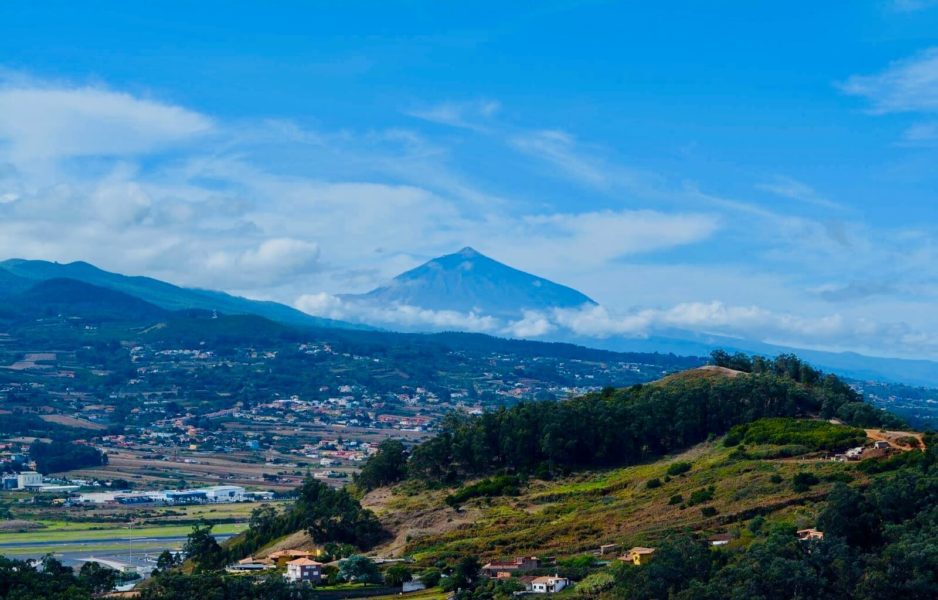
Begin your hike in the afternoon and follow Trail No. 7 to reach the Refuge in about 4 and a half hours. The first part of the trail feels like a walk in the park, only the entire landscape is dry and volcanic.
Next is a steep zig-zag section that ascends 544 meters in only 2.56 km. The sight of the refuge brings a great sense of relief.
It is best to wake up early to climb the summit in time for sunrise when you’ll see the majestic triangle-shaped shadow of El Teide projected onto the ocean.
The last part of the trail has an elevation gain of 458m. This can feel quite challenging due to the altitude and the strong wind as you’re approaching the top.
If you want to see the break of the dawn, bring a headlight and dress warmly. It gets chilly even on the Canary Islands and you learn this best standing on top of Mount Teide.
10. Sierra Helada Natural Park
The Sierra Helada Natural Park is a popular destination just around the corner from the popular resort of Benidorm.
With cliffs over 400 meters high, this area has the highest cliffs on the east coast. It’s a perfect place for hiking in Spain and is a true natural paradise that should not be missed on any visit.
The entire circular hiking trail has a length of 8 kilometres and will take 4 hours but you can make it shorter if you want. Some start the route directly from the centre of the town, while others go by car up to the cross of Benidorm and start hiking there.


Since the cross is already on a hill, you will start the hike with an incredible view of Benidorm’s dramatic skyline against the deep blue sea. Although the journey begins quite steeply, you’ll be quickly rewarded with magnificent nature and spectacular ocean panoramas.
Once you reach the ridge, you’ll then take a high-altitude path over the cliffs, one of the most beautiful parts of the route. Don’t forget your camera, because the view is breathtaking.
As a highlight, the lighthouse of Albir awaits you on the other side of the park, which is one of the most wonderful sights of the region.
My favourite tools for finding cheap travel
Disclosure: Some of the links above may be affiliate links that earn me a commission at no extra cost to you. If you purchase through my links – thank you so much! I only recommend products and companies that I use and love.